

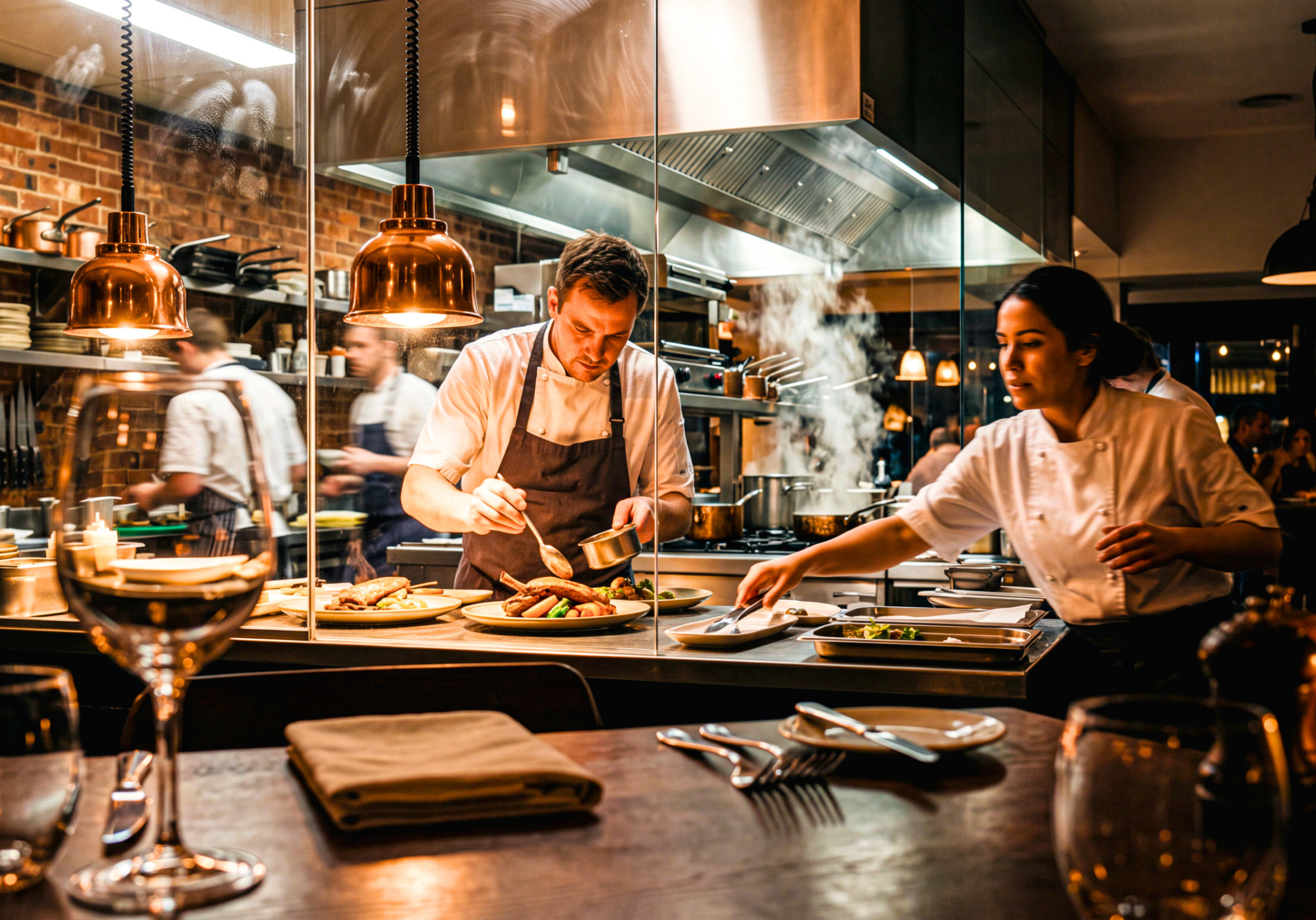
Transitioning from Sous Chef to Executive Chef: Key Skills You Need to Know
Transitioning from Sous Chef to Executive Chef: Key Skills You Need to Know
By Brian Blum
Franchise Partner | Gecko Hospitality | Restaurant Division | ME, MA, CT, RI, NH & VT
The hospitality industry naturally promotes its fastest, most technically skilled Sous Chefs and expects them to thrive at the helm. More often than not, they hit a wall.
This is one of the most persistent and costly problems facing independent restaurants and multi-unit operators today. A high-performing Sous Chef who can flawlessly expedite a Friday night service gets elevated to Executive Chef, and within a few months, food costs are out of line, turnover spikes, or the kitchen culture turns toxic. The organization loses a great line operator and gains an ineffective leader. Nobody wins.
At Gecko Hospitality, decades of hands-on operations experience inform our approach to placing leadership talent across the country, from executive chef roles in Boston to fine dining culinary management opportunities throughout New England. With a 92.5% retention rate in our placements, it is clear what separates the Sous Chefs who successfully make this transition from those who falter. The difference is rarely culinary talent. It is preparation, mindset, and a specific set of advanced administrative and leadership skills that most kitchens fail to develop in their rising stars.
This article breaks down exactly what that transition demands and how to navigate it successfully.
Why the Sous-to-Executive Chef Transition Is Harder Than It Looks
From the outside, the move from Sous Chef to Executive Chef looks like a natural extension of the same role. You have already mastered the stations, managed prep schedules, and earned the respect of the line. Running the kitchen should simply be more of the same.
It is not.
The core problem is that the skills that make someone an exceptional Sous Chef are fundamentally different from those required of an Executive Chef. A great Sous Chef excels at direct execution, pushing through the weeds, and enforcing the standards set by someone else. In an Executive Chef role, the tendency to jump on the line to solve every problem, to manage by brute force, and to focus solely on the food rather than the business will actively undermine your effectiveness.
This is the transition that most professionals in culinary management are never adequately prepared for. And without structured support, even the most capable cooks are set up to fail.
The Four Critical Skill Shifts Required
- From Cooking the Food to Leading the Kitchen
As a Sous Chef, your primary job is to execute the shift. You manage the flow of tickets, ensure plates look perfect, and keep the line moving. You are the enforcer.
As an Executive Chef, your primary job is to develop the people who execute. The most crucial “leadership hire” an organization makes is placing someone at the top who understands that their brigade is their ultimate leverage point. You cannot work every station simultaneously. Instead, you must build the capability of your Sous Chefs and line cooks to manage the execution with the same rigor you once applied personally.
This shift requires a fundamentally different vocabulary. Rather than just yelling for ticket times, you must teach:
- “How can we reorganize your prep to avoid being in the weeds at 7 PM?”
- “Walk me through how you balanced the acidity in this special.”
- “What support do you need from me to train the new garde manger?”
This coaching approach demands patience, precision, and an investment in people development that working a station does not require. For those pursuing fine dining management opportunities, this capability is non-negotiable.
2. From Managing Prep to Mastering the Kitchen P&L
Most Sous Chefs are highly competent at managing the physical inventory of a walk-in. They know what needs to be ordered for the weekend and how to utilize cross-utilize trim. That foundation is necessary but insufficient.
Executive P&L management introduces a new layer of complexity. You are now responsible for the financial engine of the restaurant. You must diagnose systemic underperformance in prime costs, engineer menus for maximum profitability, and manage labor percentages against fluctuating sales forecasts. A single blown food order is a shift problem. Consistent 38% food cost and blown labor budgets are a leadership problem.
Operators who work with experienced executive culinary recruiters in New England frequently report that financial acumen is the most common deficiency they encounter in newly promoted Execs. Developing it requires deliberate exposure to financial reporting, yield management, and strategic pricing.
3. From Shift Enforcer to Culture Creator
Maintaining standards during a busy service is a daily operational challenge. Building a culture of professionalism, sanitation, and retention across the entire back-of-house is a strategic one.
As an Executive Chef, you are the guardian of the culinary culture. The kitchen takes on your personality. You must build systems for hiring, onboarding, and retaining talent in a notoriously difficult labor market. This requires implementing accountability structures that hold the team to a defined standard, from health inspections to HR compliance, and creating feedback loops that address issues before they result in turnover.
4. From Back-of-House Focus to Front-of-House Alignment
Sous Chefs are primarily accountable to the kitchen. Executive Chefs are accountable to the entire organization’s success.
This requires a new kind of organizational intelligence. You must step out of the kitchen and align with the General Manager, the ownership, and the front-of-house team. You have to communicate clearly, translate culinary vision into training for the servers, and handle guest complaints with grace. Leaders who master this become the connective tissue between back-of-house operations and the guest experience. Those who struggle become isolated in the kitchen, fostering an “us vs. them” mentality that destroys restaurant culture.
The Role of Mentorship in Closing the Gap
One of the most preventable causes of failure in this transition is the absence of structured mentorship.
Most hospitality companies invest in training their line cooks but provide little to no structured support after a promotion to Executive Chef. They are handed the keys, the order guides, and the schedules, and are expected to figure out the rest. This “sink or swim” approach produces unnecessary burnout.
The most effective organizations pair newly promoted Execs with experienced culinary directors or external mentors who can share best practices and serve as a sounding board. They define clear success metrics for the first 90 days.
At Gecko Hospitality, our experience placing talent across New England confirms this directly. Culinary leaders who enter new roles with mentorship structures and clear developmental pathways consistently outperform those who do not. Our 92.5% retention rate reflects a placement philosophy that prioritizes long-term fit, role readiness, and ongoing support.
What Organizations Must Do Differently
The transition from Sous Chef to Executive Chef is an organizational design challenge. Companies that consistently develop successful Executive Chefs do several things differently:
They define the role with precision. Vague expectations produce vague performance. High-performing organizations clearly articulate what success looks like at 30, 60, and 90 days, defining the specific food cost, labor, and retention KPIs the new Chef owns.
They invest in culinary leadership development. This means ongoing, structured development in financial acumen, HR compliance, and coaching skills. The organizations that partner with Boston restaurant recruiters understand that the best candidates have been developed, not just promoted.
They build accountability systems. Effective kitchens run on systems, not just a chef’s personal presence. Providing robust inventory tools and structured review cadences gives new leaders the infrastructure needed to succeed.
They recognize the transition as a critical juncture. The first six months represent an inflection point. Companies that treat this period with seriousness dramatically improve retention.
What It Takes to Succeed: A Practical Summary
For Sous Chefs preparing to make this transition, or for organizations evaluating candidates, the following competencies represent the foundation of culinary leadership success:
- Advanced financial acumen: Proficiency in costing, yield management, and labor matrixes.
- Leadership coaching capability: The skill to develop culinary talent through feedback and structured accountability rather than just jumping on the line.
- Menu and brand governance: The discipline to maintain consistent execution and profitability across diverse seasons and staffing challenges.
- Organizational navigation: The ability to align kitchen operations with FOH execution and corporate objectives.
These are learnable skills. They require intention and the right support. They do not emerge automatically from being the fastest cook on the line.
Finding the Right Leaders for a Critical Role
The Sous-to-Executive Chef transition is one of the most consequential decisions a restaurant makes. When it succeeds, it builds a creative, profitable engine for the business. When it fails, it erodes margins and drives away talent.
At Gecko Hospitality, we specialize in connecting organizations with proven culinary leaders who are ready to lead from day one. Whether you are conducting a New England hospitality executive search, looking for high-level culinary talent in Boston, or building a team for a growing fine dining portfolio, we have the network and the expertise to identify the right leaders.
Our approach matches culinary capability to organizational culture and profitability goals. That is how we achieve a 92.5% retention rate, and that is the standard every executive hospitality headhunter in New England should be held to.
If your organization is ready to invest in proven culinary leadership, contact Gecko Hospitality today. The right Executive Chef doesn’t just cook great food; they build the foundation your entire restaurant thrives on.